


















































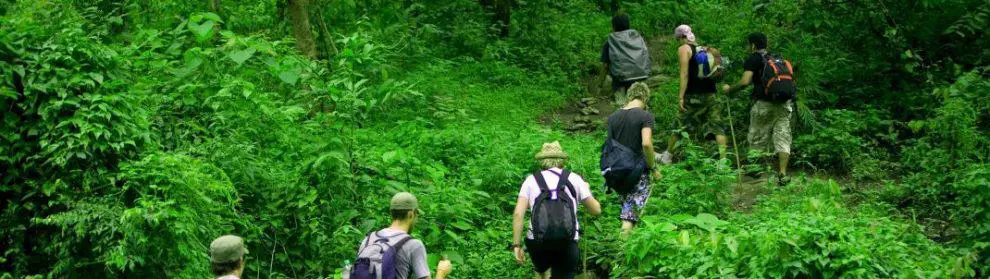
Pai trekking can range from a short viewpoint walk to several days in the mountains with a local guide. Forest, farmland, limestone scenery and community visits give the area variety, but the route and conditions matter more than the simple label ‘jungle trek’.
Use Pai as the booking and accommodation base, then choose an outing that fits your fitness, available time and interest. Some guided trips travel towards Soppong and Pang Mapha before the walking begins, so a trek sold in Pai may spend much of its day outside the immediate valley.
Choosing Between a Short Walk and a Guided Trek
A short scenic outing can suit a spare morning or afternoon, while a full-day forest trek involves sustained walking, uneven ground and time on the road. Ask about actual walking hours, climbing and descending, stream crossings and the return time rather than relying only on a kilometre figure.
A local guide becomes particularly valuable on unfamiliar forest routes, longer days and overnight trips. The guide handles route decisions and local access, explains the surroundings and arranges the meeting point and return vehicle. Confirm the guide’s language and the group size so you know how the day will work.
Tell the operator about your experience and any practical needs before paying. A trip described as medium difficulty can still involve several hours on foot, humid conditions and awkward footing; choose the route you can complete comfortably rather than the one with the longest list of stops.
Forest and Limestone Routes Towards Soppong
Pai-based operators offer guided routes through the Soppong area, where cultivated hillsides give way to bamboo forest and limestone formations. The appeal is the changing landscape: open valley views, shaded walking and rock features that are quite different from an easy stroll around Pai town.
Pai Adventures, for example, describes village-to-village routes and a walk associated with the Spirit Sinkhole. Other options include caves, streams or waterfalls. Ask which route is available for your date and where the walking starts, because transfer time is an important part of the outing.
At caves, sinkholes and steep viewpoints, stay with the guide and follow instructions about the permitted viewing area. A scenic feature does not mean you need to approach an exposed edge, climb a rock formation or enter a cave independently.
Overnight Treks and Community Visits
Multi-day trips give you more time in the landscape and can include a village overnight or camping arrangement. Confirm the accommodation, bedding, toilets, meals and luggage needs, as a rural overnight differs from returning to a hotel after a day walk.
Community visits should follow the hosts’ arrangements. Ask before photographing people, homes or private activities, and let the guide explain when and where visitors are welcome. Learn about the particular community you visit rather than expecting every village to share one culture or way of life.
Pai Canyon and Waterfall Walks
Pai Canyon offers an independent scenic stop on Route 1095, about 8km from central Pai. The initial viewpoint can give you broad valley views without committing to the narrow ridges beyond it. Those ridges have exposed drops and steep sections, so the canyon should not be treated as a straightforward beginner hiking circuit.
Choose dry conditions, wear suitable walking shoes and leave time to return before dark. If you are uncomfortable with an exposed section, enjoy the view from a wider area instead of trying to complete every path.
Longer waterfall walks need a different plan. For Mae Yen Waterfall, closure signs and damaged or high-water trail conditions have been reported. Choose another walk unless the responsible local authority or route manager confirms current permitted access and a usable route. Follow closure signs and choose another outing if the route is unavailable; a waterfall location on a map does not establish a usable walking approach.
Booking, Prices and What Is Included
There is no single admission price or timetable for trekking around Pai. Guided trip costs depend on the route, duration, group size, transfers, meals and overnight arrangements. Request the total for your actual party and date rather than comparing headline prices for different itineraries.
Ask whether the quote includes a licensed guide, transport, drinking water, meals, park fees, insurance and overnight equipment. Check any minimum group requirement and what happens if the trip cannot run because of weather or access conditions.
A trek combined with rafting is a different product from a walking-only day. Confirm both activities, their physical demands and the actual inclusions before booking. Choose the itinerary for the experience you want, rather than assuming every advertised combination has the same route.
Weather, Equipment and Route Conditions
Wear shoes with suitable grip, carry drinking water and use a small daypack for sun protection, insect repellent and rainwear. Ask the guide about the water supply, food stops and whether you need a change of clothes or overnight kit.
Rain can affect footing, river levels and road access, while heat can make a moderate climb more tiring. Let the guide adjust the route to the day’s conditions and do not assume that a crossing used on another visit is suitable now.
For an independent short walk, stay on the permitted route, tell someone your plan and turn back with enough daylight remaining. A downloaded map can help with orientation, but it does not replace signs, local access instructions or a realistic assessment of the terrain.
Meeting Points and Transfers from Pai
For a guided trek, confirm whether you meet at the operator’s town office or are collected from your accommodation. Give the exact address and check the departure and return arrangements, particularly for trips requiring a road transfer towards Soppong.
For Pai Canyon, use the designated visitor approach on Route 1095 south of town, near the Memorial Bridge area. Arrange a return vehicle if you are not driving, and avoid starting a walk that leaves you needing an unplanned ride after dark.
Travel from Chiang Mai to Pai is separate from most locally booked trekking departures. Staying in Pai beforehand makes an early meeting easier; do not assume a local trek includes a return transfer from Chiang Mai unless that is explicitly part of the booking.
Pai Trekking FAQs
Do you need a guide for trekking around Pai?
A short, permitted scenic walk may be suitable independently, but unfamiliar forest and overnight routes are best arranged with a local guide. Ask about the exact terrain and access before deciding.
Are all treks close to Pai town?
Some trips travel towards Soppong or Pang Mapha before the walking starts. Confirm the trail area and transfer time so you understand how much of the day is spent walking and travelling.
Is Pai Canyon an easy hiking circuit?
The first viewpoint offers scenery without committing to the exposed ridge paths. Beyond it, narrow sections and steep drops require care, and visitors can stop at a wider viewing area instead of completing the ridges.
Can you walk to Mae Yen Waterfall?
Closure signs and damaged or high-water trail conditions have been reported. Choose another walk unless the responsible local authority or route manager confirms permitted access and a usable route. A commercial itinerary or another visitor completing the hike does not override closure signs.
How much does a trek cost?
Prices vary by route, duration and group size. Ask for a quote that identifies the guide, transfers, meals, water, park fees, insurance and any overnight accommodation or equipment.
What should you bring?
Suitable walking shoes, drinking water, sun protection, insect repellent and rainwear are useful basics. Confirm additional requirements with your guide, particularly for stream crossings or an overnight trip.
Can a trek include a village stay?
Some guided multi-day itineraries offer community accommodation. Confirm the facilities and host arrangements, and ask before photographing residents or entering private spaces.









Do You Have a Question to Ask?