
















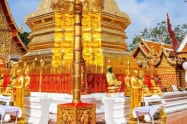






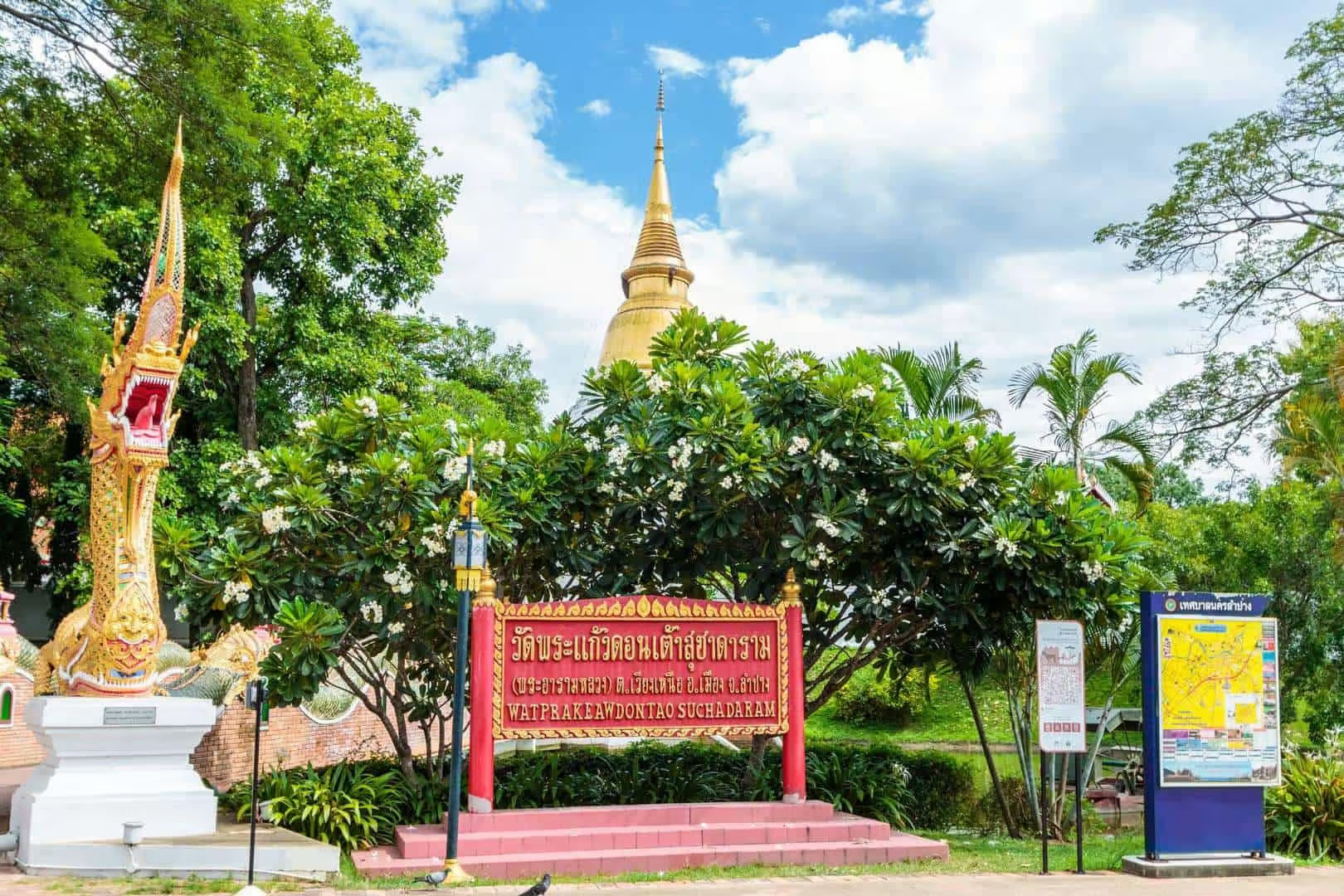
Wat Phra Kaew Don Tao Suchadaram is one of Lampang’s most rewarding temple complexes, with a large golden chedi, a richly decorated Burmese-style pavilion and buildings reflecting northern Thailand’s overlapping artistic traditions. Its association with the Emerald Buddha adds historical significance, while the adjoining Suchadaram section gives visitors more to explore than a single courtyard.
The temple lies north of the Wang River in Wiang Nuea. Allow an unhurried visit to appreciate the contrast between the tall chedi, intricate pavilion and quieter devotional spaces, rather than stopping only for a photograph of the main stupa.
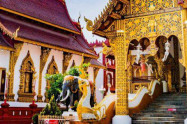
The chedi and Burmese-style pavilion
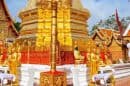
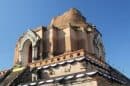
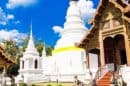
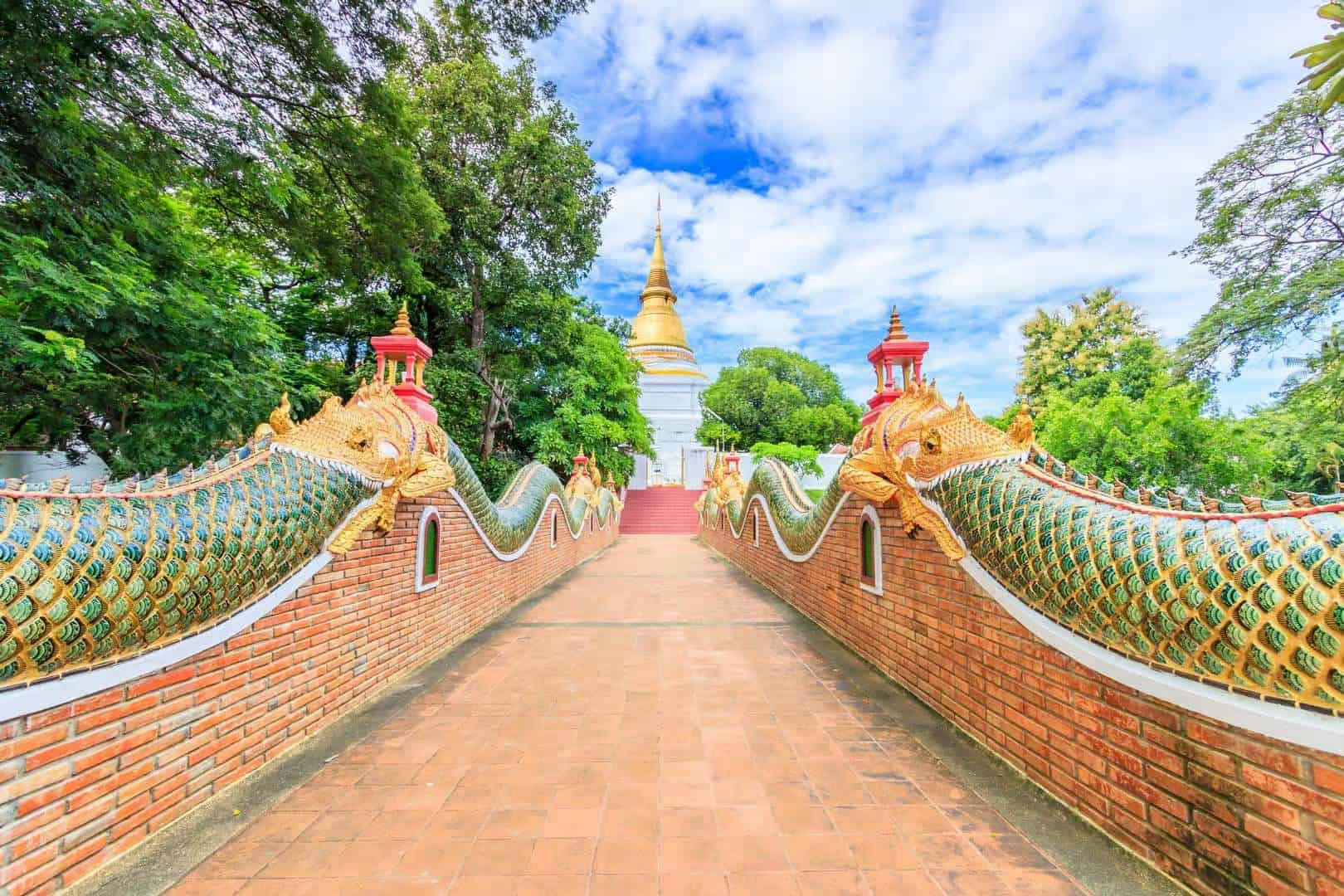
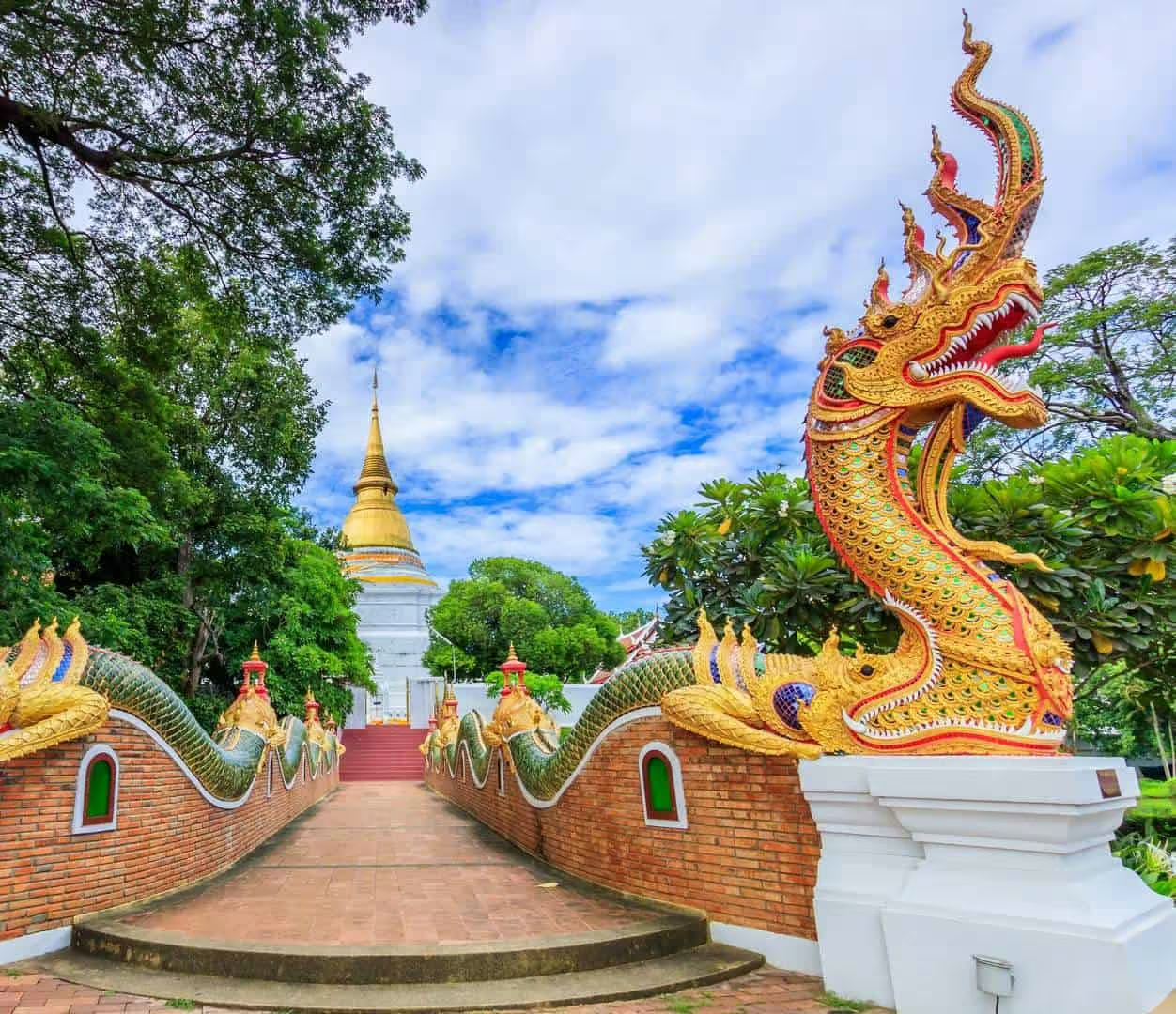
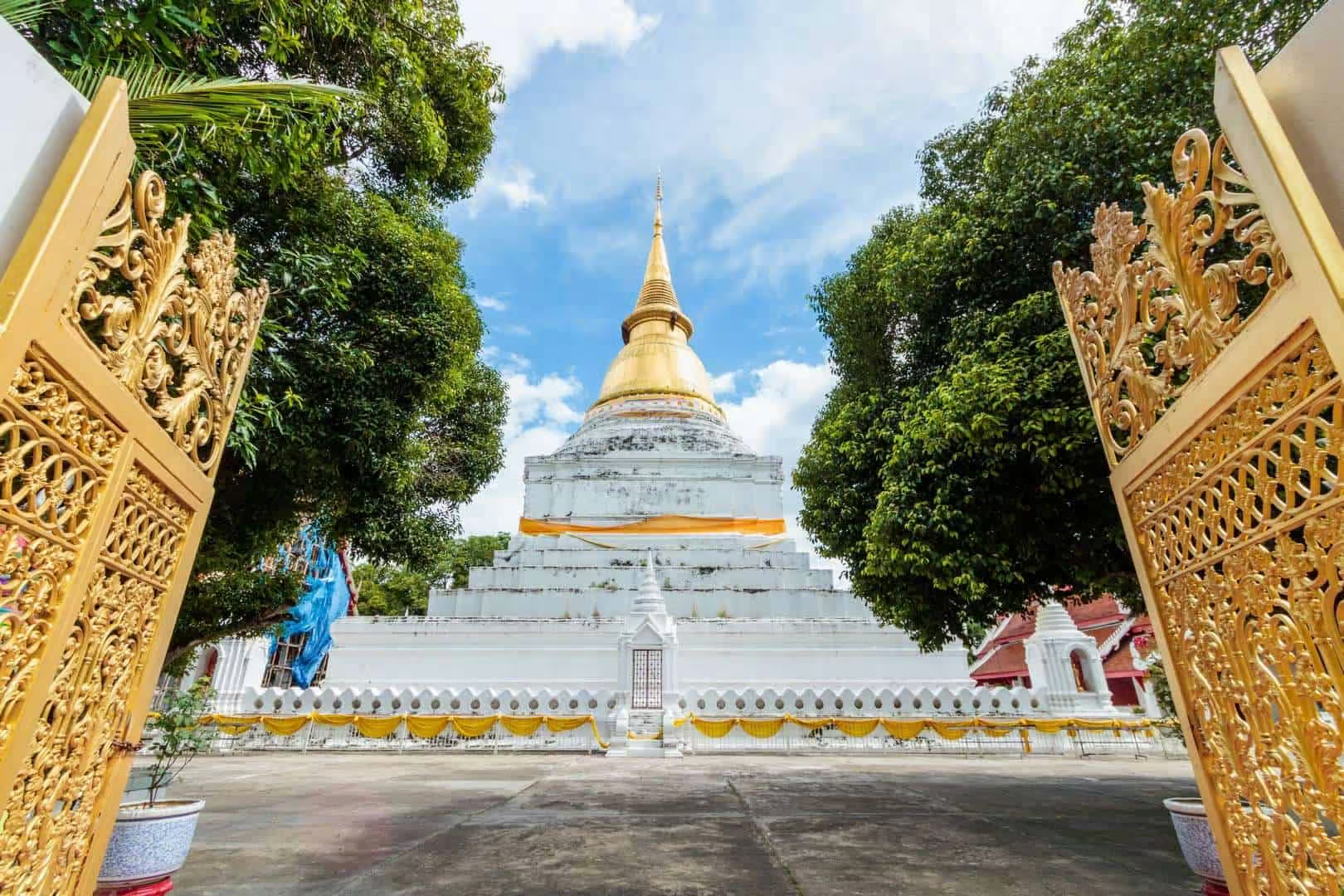
The golden chedi provides the main landmark, rising above a pale base and the surrounding buildings. Walk around it where access permits to appreciate its form and position within the complex. Religious activity can affect the route, so follow signs and leave space for people making offerings.
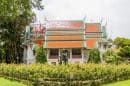
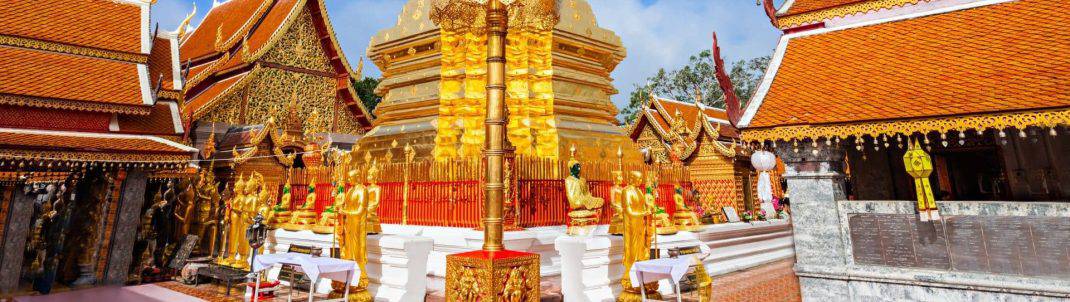
The nearby mondop, or pavilion, offers a much more intricate experience. Its tiered Burmese-style roof and colourful glass mosaic decoration reward close attention, particularly around the ceiling and the Buddha image inside. The pavilion is associated with Burmese and Shan patronage during Lampang’s teak-trading era, when these communities contributed strongly to the city’s religious architecture.
These two structures work well as the focus of a shorter visit. Together, they show why Lampang’s temples can look different from familiar Chiang Mai examples: local Lanna forms sit alongside decorative traditions linked to communities with roots across the border.
The Emerald Buddha connection and Suchadaram
Wat Phra Kaew Don Tao formerly housed the Emerald Buddha during the 15th century, before the image continued its journey through northern Thailand. The Emerald Buddha is now in Bangkok’s Wat Phra Kaew; the Lampang temple is an important former home rather than its current location.
Traditional accounts connect the image’s arrival here with an elephant that turned towards Lampang instead of continuing to Chiang Mai. Read this as part of the temple’s storytelling tradition. It gives meaning to local representations of the journey without requiring every element of the legend to be treated as documented history.
The full temple name also incorporates Suchadaram, an adjoining section with its own halls and local stories. Explore beyond the principal chedi if buildings are open, looking at the timber architecture and devotional details. The legend of Mae Suchada, associated with an emerald found in a watermelon, belongs to this local tradition and should not be confused with the history of the Bangkok Emerald Buddha.
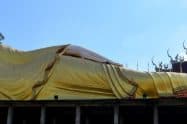
A reclining Buddha and other image halls add variety to a longer visit. Individual interiors or heritage displays may have more limited access than the grounds, so keep your plans flexible and ask locally about any rooms you particularly want to see.
Visiting respectfully and allowing enough time
Around an hour is a useful planning allowance for the main structures and Suchadaram section. Visitors interested in architecture may want longer, while a brief stop can concentrate on the chedi and pavilion. Morning or later afternoon usually offers a more comfortable walk than the hottest part of the day.
Plan within the listed daytime visiting window of 8am-5pm, and confirm access to individual buildings. Admission arrangements may differ for general grounds, visitors and heritage rooms; carry small cash and ask about any applicable charge at the entrance. Donations and religious offerings are separate from admission.
Cover shoulders and knees, remove shoes before entering halls where required and avoid touching decorative work. Ask before photographing interiors or worshippers. Steps, raised thresholds and uneven surfaces can affect access, so visitors with limited mobility should check the route to the pavilion and intended halls.
Getting there in Lampang
The temple is on Phra Kaew Road in Wiang Nuea, north of the Wang River. From central Lampang, the approach across the Ratchadaphisek Bridge leads into the northern neighbourhood and towards the temple. A local driver or agreed songthaew journey is useful if you want to combine several temples without depending on transport appearing at each stop.
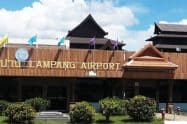
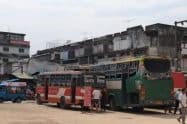
This is a Lampang attraction, so a visit from Chiang Mai requires a regional journey. Include travel between Lampang’s railway or bus station and the temple in your itinerary. Wat Phra That Lampang Luang is another distinct temple outside the city; seeing both requires additional driving and should not be treated as a short walk between neighbouring sites.
Wat Phra Kaew Don Tao Suchadaram FAQs
Is the Emerald Buddha still here?
No. The temple was a former home of the Emerald Buddha during the 15th century. The image is now at Wat Phra Kaew in Bangkok, while Lampang preserves its own buildings and traditions connected with that history.
What should I prioritise?
Start with the golden chedi and Burmese-style mondop, whose roof and glass mosaics are defining features. Continue into the Suchadaram section and other open halls if you have more time.
How long does a visit take?
Allow about an hour for an unhurried circuit of the main areas. Architecture enthusiasts may stay longer, particularly when individual halls or displays are open.
Is there an admission fee?
Confirm any applicable visitor or heritage-room charge at the entrance. Carry small cash, and distinguish admission from optional donations or offerings made during the visit.
Is this the same temple as Wat Phra That Lampang Luang?
No. Wat Phra Kaew Don Tao Suchadaram is in Lampang’s Wiang Nuea neighbourhood. Wat Phra That Lampang Luang is a separate temple outside the city and requires additional transport.
What access should I expect?
The complex includes outdoor walking, steps and raised entrances to halls. Ask about the route to specific buildings if you need assistance, and follow the temple’s dress and footwear instructions.









Do You Have a Question to Ask?